
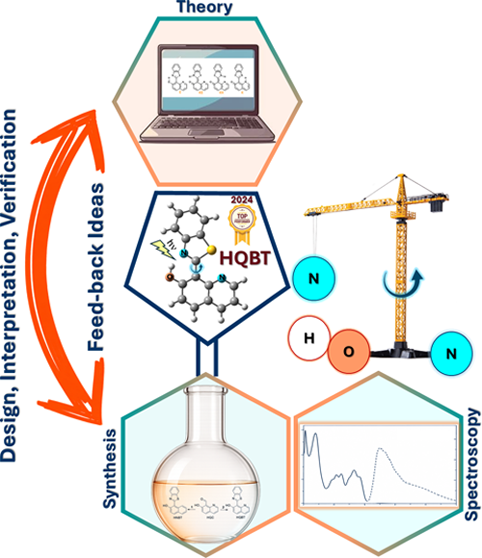
Nature effectively employs the light-induced transfer of a proton for rapid interconversion between different electronic states of a molecule and uses tautomerism as a functional design principle in biological systems. Twenty-five years ago, the theoretical design concept of proton cranes was introduced to describe molecules capable of transferring protons at a long-range upon photoexcitation, by analogy with the functioning of a mechanical crane. Unlike conventional materials whose function relies on proton transfer events, the proton cranes operate with atomic level precision, enabling the controlled delivery of a proton between predefined sites within a molecule. Shortly after, the theoretical concept was extended to reversibly operating proton delivery systems, placing the proton cranes in the field of molecular machines and light-responsive switches. In 2024, the first clean switching in proton cranes was theoretically predicted and experimentally demonstrated, opening a highway to a broad range of real-world applications of these intriguing systems. Here, we provide an outlook of the current state of the art and progress in the field and formulate guidelines for further development of efficient proton cranes.