The findings for the tautomeric research and, more specifically, the investigations for predictability of tautomeric state and proton transfer (PT) mechanisms will enable us to perform and implement in reality the so-called concept of tautomer-based drug design. Tautomerism is an important phenomenon observed in many drugs and biomolecules [1]. It plays a vital role in key biochemical processes, in particular those involved in dynamic interactions of biologically active molecules with proteins, enzymes, DNA, RNA, and cellular receptors. In general, a molecule that exhibits tautomerism can be described as chimeric or chameleonic due to its existence in form of different tautomers. Depending on the surrounded milieu (in solution, solid state or under physiological conditions), such molecule can be presented by two (or more) structures as a result of an intramolecular movement of a hydrogen (PT) from one heteroatom to another. In fact, many drugs and biomolecules contain hetero-aromatic systems predetermining their existence in certain tautomeric forms. Important drugs like cimetidine, favipiravir, didanosine, diazepam, topotecan, sildenafil, and others are only few examples of biologically active molecules that exhibit tautomerism. Other drugs, called prodrugs, are converted into their biologically active tautomeric form in vivo (for example, enzymatic cleavage) based on their tautomeric preferences.
The primary aim of the current research direction is to perform tautomer-based drug design of suitable small molecules and, based on the estimated tautomeric properties, to investigate their therapeutic potential against variety of diseases. In a longer perspective, the study of the tautomeric properties in solution (i.e., under physiological conditions) of tautomeric bioactive molecules will be accompanied by biological evaluation as multi-target-acting agents against neurodegenerative diseases (NDDs). It well-known that NDDs are multi-factorial disorders, caused by complex pathophysiological processes, including oxidative stress, neuroinflammation, excitotoxicity, mitochondrial dysfunction, and proteolytic stress. The current therapy of NDDs, including Alzheimer´s disease (AD) and Parkinson´s disease (PD), is based on the “one molecule-one target” paradigm. These so called “single-target” drugs have an impact on several symptoms in different disease stages and improve quality of life for patients, but do not stop the disease progression nor exhibit a neurorestorative effect. Therefore, to combat the multifactorial nature of PD, we will focus our research in this RT toward development of small molecules that modulate more than one therapeutic target – the so-called multi-target-directed ligands by using of tautomer-based drug design as a starting point for the design of biologically active new chemical entities.
News
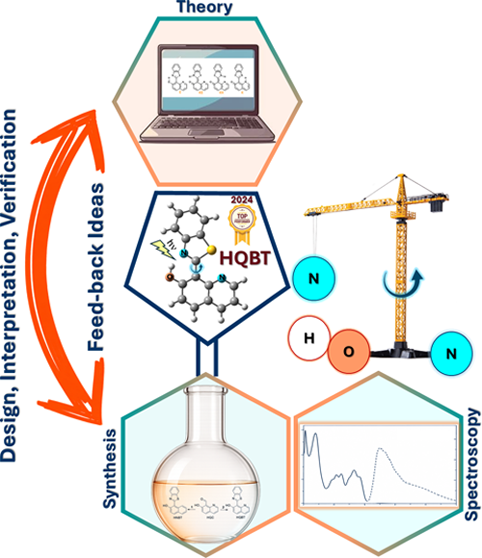
Proton Cranes ─ Tautomeric Systems for Intramolecular Cargo Delivery
Nature effectively employs the light-induced transfer of a proton for rapid interconversion between different electronic [...]
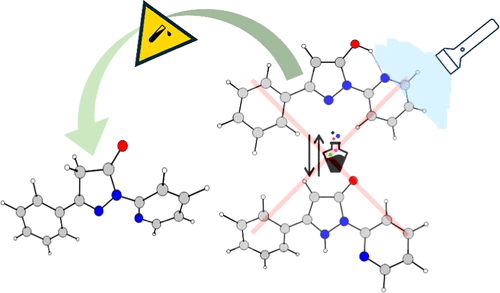
Tautomerism in 1-Pyridin-2-yl-1H-pyrazol-5-ols through the Prism of Molecular Switching: The Rare Case of OH/CH Switching upon Acidic Input
The tautomeric behavior of 1-(2-pyridinyl)-1H-pyrazol-5-ols has been investigated in solution using UV–vis and NMR spectroscopies [...]

Reversible Switching Based on Truly Intramolecular Long-Range Proton Transfer─Turning the Theoretical Concept into Experimental Reality
Herein, we demonstrate a working prototype of a conjugated proton crane, a reversible tautomeric switching [...]