Computational Modelling of Tautomerism: From Ground to Excited States
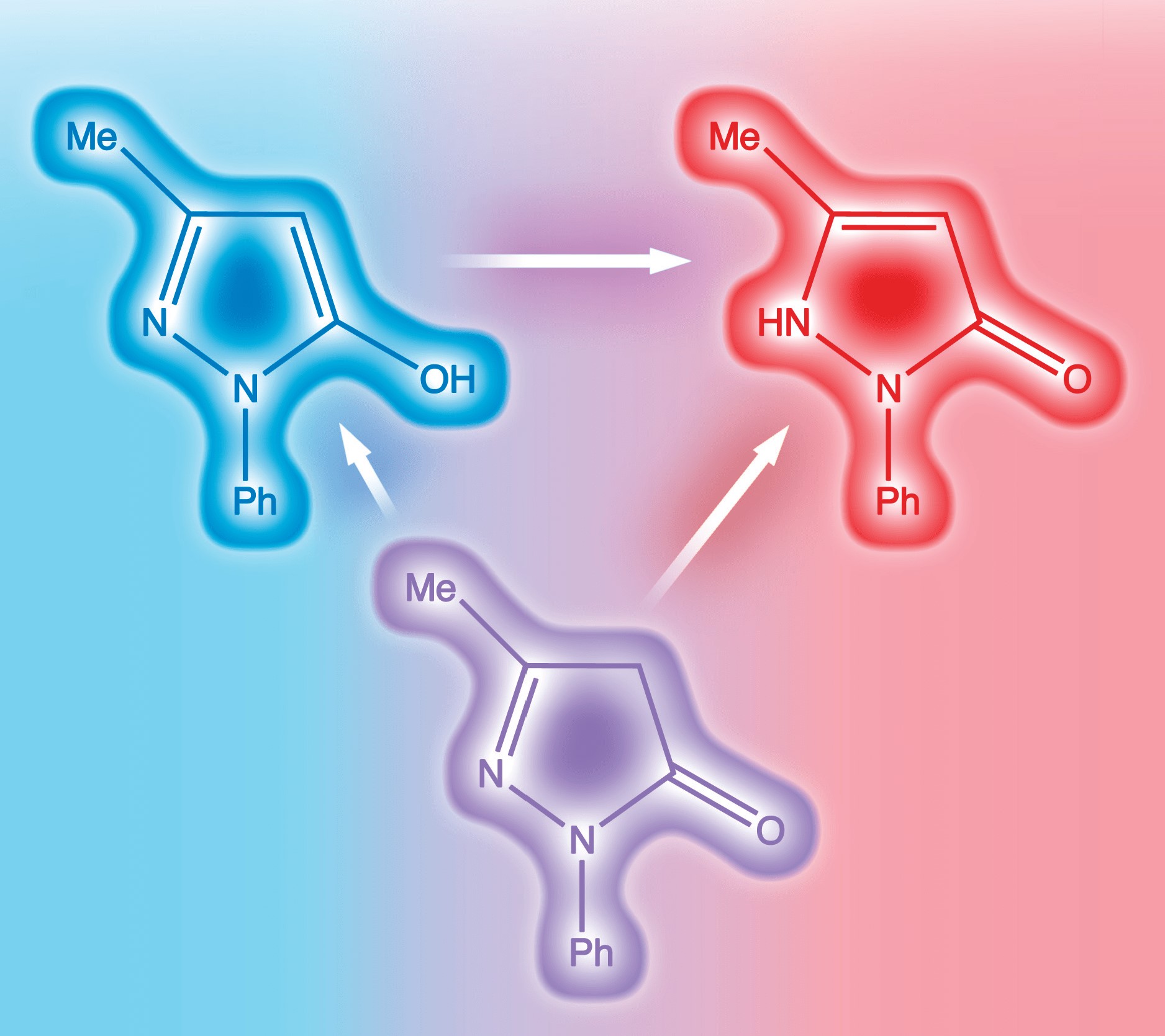
Join us for an exciting one-day workshop exploring the fascinating world of tautomerism through the lens of computational chemistry. Designed for undergraduate and early graduate students, the workshop combines interactive lectures with hands-on computational exercises, providing a practical introduction to the fundamentals of tautomerism, ground and excited intramolecular proton transfer and their modern applications in light-driven molecular machines.
No prior experience in computational chemistry is required. Through fully guided practical sessions, participants will gain experience with quantum-chemical modelling and learn how computational methods can be used to explore one of the most intriguing phenomena in molecular science – ground and excited state tautomerism.
Whether your interests lie in physical chemistry, organic chemistry, photochemistry, materials science, or molecular modelling, this workshop will offer valuable insights into how computational chemistry helps us understand and design molecular systems.]
| Time | Session | Topic and details |
|---|---|---|
| 9:00 – 9:15 | Introduction Prof. L. Antonov |
What is tautomerism? The landscape from A to Z
Structural isomers, resonance vs tautomers, the proton-hop Course roadmap: from ground state (1) → excited state (2) |
| 9:15 – 10:00 | Lecture 1 Prof. S. Angelova |
Ground-state tautomerism: thermodynamics, kinetics, properties
Case study: 2-(2-hydroxyphenyl)-benzothiazole. |
| 10:00 – 10:15 | Coffee break | |
| 10:15 – 11:15 | Hands-on session 1 Prof. S. Angelova Assist. Prof. N. Kircheva |
Predicting ground-state populations and UV-vis spectra with DFT Case study: 2-(2-hydroxyphenyl)-benzothiazole.
|
| 11:15 – 11:30 | Break | |
| 11:30 – 12:15 | Lecture 2 Assoc. Prof. J. Romanova |
From light to motion: introduction to ESIPT and molecular cranes The lecture will introduce the fundamentals of Excited-State Intramolecular Proton Transfer (ESIPT), a photophysical process that converts light energy into structural and functional changes at the molecular level.Participants will explore the principles of excited-state tautomerism, the pathways of ESIPT systems, and their application in molecular machines, with a focus on molecular cranes as prototypes of light-driven nanoscale motion. |
| 12:15 – 13:00 | Lunch break | |
| 13:00 – 13:45 | Hands-on session 2 Assoc. Prof. J. Romanova |
Quantum chemical modelling of ESIPT and excited-state tautomerism In this hands-on session, participants will use quantum-chemical methods to investigate excited-state intramolecular proton transfer (ESIPT) and excited-state tautomerism.Through guided computational exercises, they will optimize the structures of electronically excited states, evaluate the thermodynamic driving forces governing proton transfer, and explore the associated potential energy surfaces.Finally, the emission properties of the resulting tautomers will be simulated and correlated with their excited-state structures.Case study: 2-(2-hydroxyphenyl)-benzothiazole. |
| 13:45 – 14:00 | Break | |
| 14:00 – 14:45 | Hands-on session 2 (continuation) Assoc. Prof. J. Romanova |
Quantum chemical modelling of ESIPT and excited-state tautomerism — continued. |
| 14:45 – 15:00 | Break | |
| 15:00 – 15:45 | Lecture 3 Prof. Benoît Champagne |
Quantum chemical modelling of the second-order nonlinear optical properties of tautomers This lecture will show how quantum chemical methods can be used to investigate the contrast of first hyperpolarizability, β, between tautomers, within the context of elaborating multi-addressable molecular switches.Two types of aspects will be addressed:
|
| 15:45 – 16:00 | Break | |
| 16:00 – 16:30 | Closing remarks Prof. L. Antonov |
Closing remarks and take-home messages. |
To register please submit your name, status (BSc/MSc student, PhD student, postdoc, etc.), institution you come from and e-mail address to the following e-mail address: uctrest@uni-plovdiv.bg
The registration closes on Oct 20.